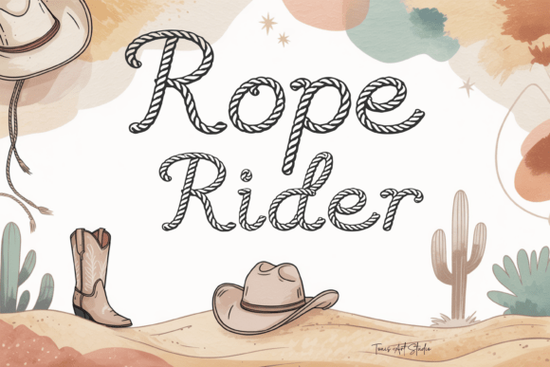
If you are looking for a western-style typeface that balances authentic cowboy charm with practical readability, the Rope Rider Font delivers exactly what most designers and makers need. Handcrafted with twisted rope strokes and smooth curves, this display typeface captures the feel of classic lassos and ranch culture without sacrificing clarity. It was built specifically for creators who want decorative western lettering that still holds up well on actual merchandise and digital layouts.
When working on rustic projects, standard blocky western fonts often feel too harsh or lose their shape when scaled down. This handcrafted rope design solves that problem by carefully shaping each character to mimic real cord tension. The letters maintain consistent thickness across the twists, which means they stay legible on everything from small stickers to large wall decor. You can explore more decorative typefaces with similar texture if you need layout alternatives, but the flowing curves here give it a softer, more approachable western feel that pairs well with modern branding.
What makes this typeface different from standard western fonts?
Most cowboy fonts rely on sharp spurs, heavy serifs, or overly distressed edges that do not translate well to modern crafting tools. This design takes a different approach by focusing on smooth rope braids and rounded terminals. The result is a cleaner aesthetic that works just as well for family-oriented crafts as it does for rugged ranch branding. Because the strokes are balanced and cut-safe, you will not struggle with fragile vinyl bridges or uneven weeding when cutting with a machine. The letter spacing has also been adjusted to prevent the rope strands from overlapping awkwardly, which is a common issue in novelty western letters.
Which software and cutting tools support these rope-style letters?
Digital and physical makers can drop these files straight into their usual workflows. The font installs quickly on any desktop system and maps perfectly with popular design platforms. Whether you build layouts in Canva, edit vector paths in Illustrator, paint mockups in Procreate, or prepare sublimation files in Photoshop, the text remains crisp and scalable. Crafters who use electronic cutters will appreciate how cleanly the curves separate. The rope strands maintain enough thickness to survive standard blade settings on both Cricut and Silhouette machines. If you work with laser engravers or heat press transfers, the paths are already optimized for HTV and adhesive vinyl applications.
For a closer look at how this typeface performs across different mediums, you can check out the official Rope Rider collection. It shows how the twisted letterforms hold up in both digital mockups and physical cut files.
How can you apply western lettering to everyday projects?
The flexibility of this font makes it a reliable choice for small shops, print-on-demand sellers, and weekend DIYers. Here are a few ways creators typically put it to work:
- Ranch and homestead signage – Use the bold letterforms on wood panels, metal plates, or porch signs to create that authentic western look.
- Apparel graphics - The smooth curves transfer cleanly to t-shirts, trucker hats, and canvas tote bags, especially when paired with simple rodeo or mountain illustrations.
- Cricut and Silhouette crafts - Layer the rope letters over rustic backgrounds for scrapbooking, birthday invitations, or party decor that leans into a cowboy theme.
- Logo and social media headers - The consistent weight makes it easy to combine with clean sans-serif fonts for modern western branding that still stands out on Instagram or Etsy listings.
What should you check before cutting rope-style text?
Even with a cut-safe design, working with textured letters requires a few quick adjustments. Always preview your design at actual print size before sending it to your cutter or printer. Rope fonts can appear slightly thicker on screen, so reducing the font size by 10 to 15 percent often improves legibility on final products. If you are weeding vinyl, keep the cut speed on a slower setting to allow the blade to follow the curved twists without tearing the material. When printing on dark backgrounds, use a subtle drop shadow or outline to ensure the inner rope gaps do not disappear.
Quick preparation checklist:
- Test your text on a scrap piece of vinyl or paper before committing to a full print run.
- Set your electronic cutter to medium speed with standard blade pressure to protect the curved edges.
- Pair the rope lettering with simple geometric or minimalist icons to keep the overall layout readable.
- Export final designs as high-resolution PNG or vector files depending on your printing method.
- Keep a neutral or earthy color palette in mind to match the western aesthetic without overwhelming the text.
Start by placing a few sample words into your design canvas to see how the twisted strokes align with your other elements. Adjust tracking and layer order until the composition feels balanced, then move straight into production.
Learn More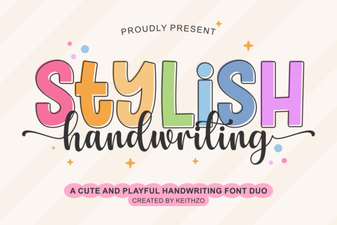 Creative Fonts for Your Beautiful Handwriting Designs
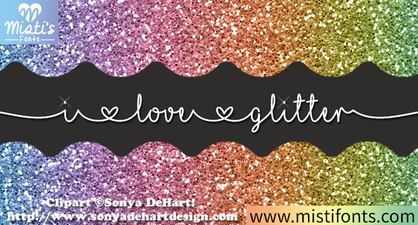 Free Glitter Font Downloads for Creative Designers
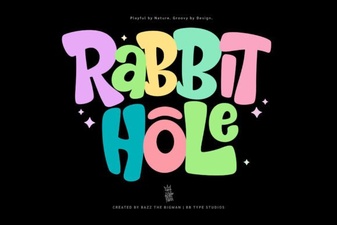 Rabbit Hole Font: Creative Inspiration & Typography Ideas
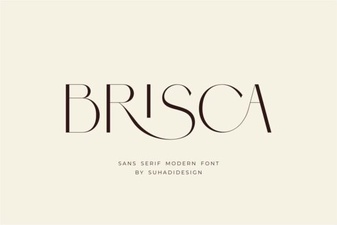 Brisca Font for Modern Design Projects
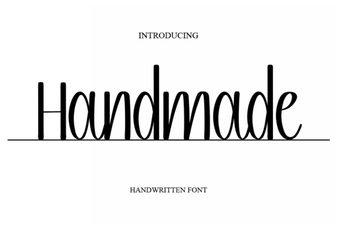 Crafting the Perfect Handmade Font for Your Design Projects
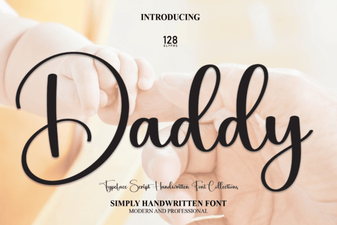 Creative Daddy Font Ideas for Your Graphic Design Projects